What are the LAFD brush clearance requirements in Los Angeles?
The LAFD requires brush cleared within 200 feet of any structure in the City’s Very High Fire Hazard Severity Zone. The same rules cover 10 feet along roadsides and combustible fences. Grass and native brush get cut down to 3 inches. The work is due by May 1, 2026, and the LAFD expects it kept up all year.
This guide is for property owners holding the LAFD’s brush clearance mailer or a Notice of Noncompliance. It covers the 2026 LAFD brush clearance requirements, the fees and where the cuttings go. If you want to hand it off, our lot cleanup crews cut the brush and haul it away.
Who has to clear brush under the LAFD rules?
Owners of parcels inside the City of Los Angeles Very High Fire Hazard Severity Zone. The Los Angeles Fire Department (LAFD) mails those owners an Owner Notification in March. The 200 feet counts structures on the adjoining parcel too. You only clear your own property, though.
A vacant lot can still sit within 200 feet of the house next door, so its brush counts. To check a parcel, register a Brush Clearance account on the LAFD’s FIMS site. Sign up with the APN and PIN printed next to your name on the mailer.
The account shows whether the parcel is in compliance. A failed parcel’s account also shows the inspector’s photos of the hazards. The LAFD calls this the defensible space and brush clearance program, and it belongs to the City of Los Angeles. A parcel in a different city follows that city’s rules.
What does the LAFD require you to clear?
Under the LAFD rules, grass and native brush within 200 feet of structures come down to 3 inches. Trees get their lower branches trimmed up, and dead plants come out. The roof and chimney need clearance too. Landscape plants fall under the same rules as native brush.
| Item | The LAFD rule |
|---|---|
| Grass | Cut to 3 inches in height |
| Native brush | Reduced in quantity to 3 inches in height |
| Native shrubs spaced at least 18 feet apart | Exempt from the 3 inch cut if trimmed up from the ground to one third of their height, dead material removed |
| Trees taller than 18 feet | Lower branches trimmed so no foliage is within 6 feet of the ground |
| Trees and shrubs under 18 feet | Lower branches removed to one third of their height |
| Dead trees and vegetation | All of it removed |
| Chimney | Tree foliage no closer than 10 feet from the chimney outlet |
| Roof | Kept free of leaves and needles, with 5 feet of vertical clearance under overhanging trees |
| Cut vegetation and debris | Removed in a legal manner |
| Chips within 30 feet of structures | Spread back no deeper than 3 inches |
| Chips beyond 30 feet of structures | Spread back no deeper than 6 inches |
| Chips near a road | None within 10 feet of a usable roadside |
| Landscape plants | The same general rules apply |
These rules come from Los Angeles Municipal Code Section 57.1.603.5, per the mailer. The LAFD is the final authority on compliance. Upkeep is year-round and may take clearing more than once a year.
When does the LAFD inspect, and what does failing cost?
The LAFD runs initial inspections from May 1 through June 30, 2026, and you never need to call for one. A parcel that passes pays no fee. A parcel that fails owes the $31.00 inspection fee and gets 20 days to comply before a second inspection.
The LAFD says the first round takes about four to six weeks to reach every parcel in the zone. A failed parcel gets a Notice of Noncompliance. Fix everything within the 20 days and pass the second inspection, and the $31.00 fee is the whole bill.
Fail the second inspection and the LAFD adds a $758.00 Brush Non-Compliance Fee. The parcel then gets a Second Notice to Abate a Fire Hazard. From there, City contractors clear the parcel, and the property owner gets the bill.
That bill is the $1,740.00 Brush Administrative Cost Fee, plus the contractor’s lowest bid, plus the $31.00 and $758.00 fees. The mailer marks every fee subject to change. Inspection-related bills go out by mail beginning August 2026. Paying one late brings a 200 percent penalty, the mailer says.
Parcels affected by the Palisades fire may be exempt from the $31.00 fee, according to the mailer. An exempt parcel that fails still gets a Notice of Noncompliance. In May 2026 the City Council voted to cancel the $31 bills already sent to Palisades owners whose property the fire damaged or destroyed. Our crews are working in the Pacific Palisades fire area now, and weed abatement to the LAFD fire code is part of that work.
What safety rules apply while you clear?
The LAFD bans brush clearance on red flag days. Metal cutting blades must be non-ferrous and non-sparking. A fire extinguisher or a pressurized garden hose with a nozzle has to be within 10 feet of the work. A charged cell phone that can dial 9-1-1 has to be at hand.
Whoever does the clearing cannot do anything else while cutting. All clearing also has to follow the City’s rules on protected native trees and shrubs.
Where do the cuttings go?
Off the property, or back onto it as chips. The LAFD says all cut vegetation and debris must be removed in a legal manner. Chips can be spread back up to 3 inches deep within 30 feet of structures and 6 inches beyond that. None can go within 10 feet of a usable roadside.
LA Sanitation offers one free collection a year for excess yard trimmings, the mailer notes. The mailer’s checklist also asks owners to remove hazardous refuse by May 1, along with hazardous vegetation. Junk and debris piles count, and our junk removal work covers those.
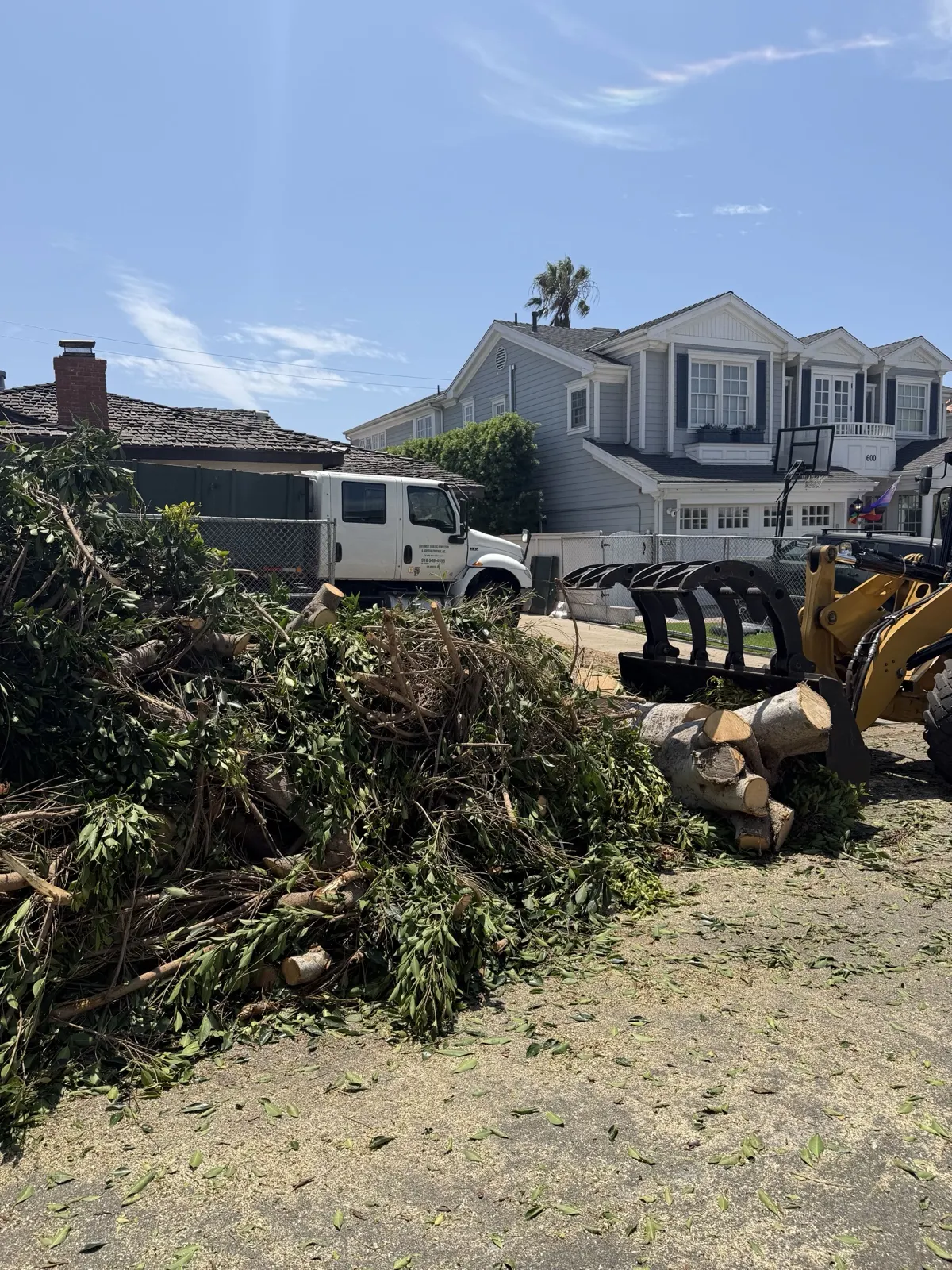
When we do the clearing, the cuttings leave on our own trucks the same day. Green waste loads apart from trash, and each goes to a licensed facility.
Should you hire a contractor for brush clearance?
If you cannot clear the property yourself, the LAFD mailer says to hire a professional who understands the requirements. The City does not recommend or endorse any contractor. The LAFD says to ask for current proof of insurance, bond and license. Then check the license with the California Contractors State License Board.
Southwest Hauling was founded in 1994 and is licensed and insured, CA License 792182. Our crews cut brush, weeds and grass back, and clear dead growth, dead trees and fallen limbs. Then we haul it all away. We work flat lots and slopes, and hillside parcels in Bel Air and across the Westside are part of our service area.
Some of what the LAFD asks for is tree and roof work: trimming living trees, skinning palms and clearing roofs. Those stay with you as the property owner. An estimator goes over the notice with you on a free visit.
What changes when you sell a house in the fire zone?
Buyers of residential property in the Very High Fire Hazard Severity Zone get specific disclosures. California’s AB 38 has required them since January 1, 2021. The LAFD lists the form for them: the C.A.R. form FHDS. Its full title is the Fire Hardening and Defensible Space Advisory, Disclosure, and Addendum.
The LAFD also flags palms: many species catch embers. High hazard palms need pruning and skinning every year when they stay in place. That is tree work, so plan it apart from the brush.
Got the mailer or a Notice of Noncompliance? Call (310) 546-4855 or use our contact form to book a free estimate. We work the Westside and the South Bay. Have the notice ready for the estimator, and we will clear the brush it calls for.