How We Run a Job Site
Cal/OSHA writes the safety rules for every construction job in California, and demolition has its own chapter. Southwest Hauling has run demolition and hauling crews in Los Angeles since 1994. The company holds California contractor license #792182 and carries insurance. Our job sites run to the Cal/OSHA standard, and this page explains what that means on your property.
The short version: the hazards get found before the first wall comes down, the crew wears the gear the work calls for, the dust stays on the lot, and the debris leaves on our own trucks and equipment. The same rules cover tearing down a house, gutting an interior for a remodel and breaking out a pool.
The estimate is where you hear all of it. If the job needs a survey, a permit or a different machine, you hear it then, before anything gets torn up.
 Licensed and Insured · CA Lic #792182
 Cal/OSHA requires a qualified person to survey the framing, floors and walls before demolition starts, looking for any chance of an unplanned collapse. The survey is written down and kept on the job site. Anything weak gets shored or braced first.
Cal/OSHA requires every utility shut off, capped or otherwise controlled at the building or curb line before demolition starts. The utility company or a licensed trade does that work, never our crew. Gas, electric and water lines are handled before the first wall moves.
Every demolition in the South Coast air district gets an asbestos survey first, by a certified consultant. Anything found comes out before we start, by licensed abatement crews. The AQMD notification goes in at least 10 working days ahead. Abatement is a separate licensed trade, done before our crews arrive.
The city permit runs alongside all three. The LADBS demolition permit steps, the 45-year notice and the asbestos paperwork are laid out in our permit guide.
Cal/OSHA puts it plainly: the employer requires the gear, and the hazard decides it. Head protection goes on where anything can fall or fly. Eye protection goes on where concrete breaks, tile shatters or a saw runs. Respirators come out where dust builds, with the silica rule setting when. Our crews work in high-visibility shirts so they can be seen around the trucks and machines.
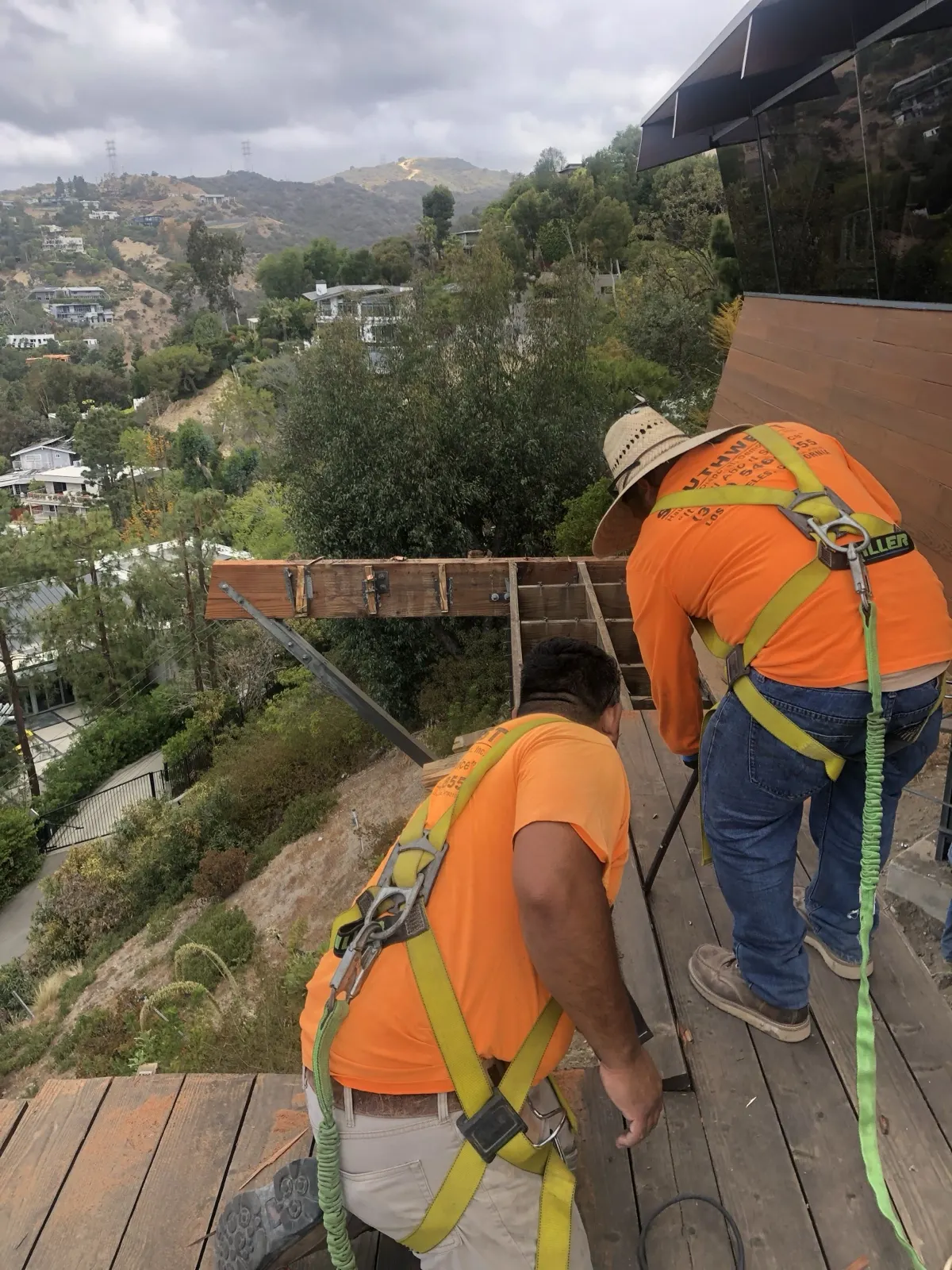
Fall protection starts at 7 1/2 feet. Cal/OSHA requires a harness with a fall arrest, fall restraint or positioning system for anyone working near an unprotected edge above that height. That covers a hillside deck, a second-floor strip-out or the top of a house coming down. The crew in the photo at the top of this page is wearing harnesses on a deck above Los Angeles.
Debris never drops where someone could be under it. Where material leaves a building from above, Cal/OSHA requires an enclosed chute or a drop zone protected by barricades or fencing, with warning signs posted. A qualified person supervises the demolition the whole time, with the authority to stop the work.
 Los Angeles job site
 For the crew, Cal/OSHA's silica rule applies to every tool that breaks or cuts concrete, tile or masonry. It sets a hard exposure limit and names the control for each tool. A jackhammer or chipping tool has to run with water at the point of impact, or with a shroud and a dust collector. Respirators come in when the hours run long or the work is indoors.
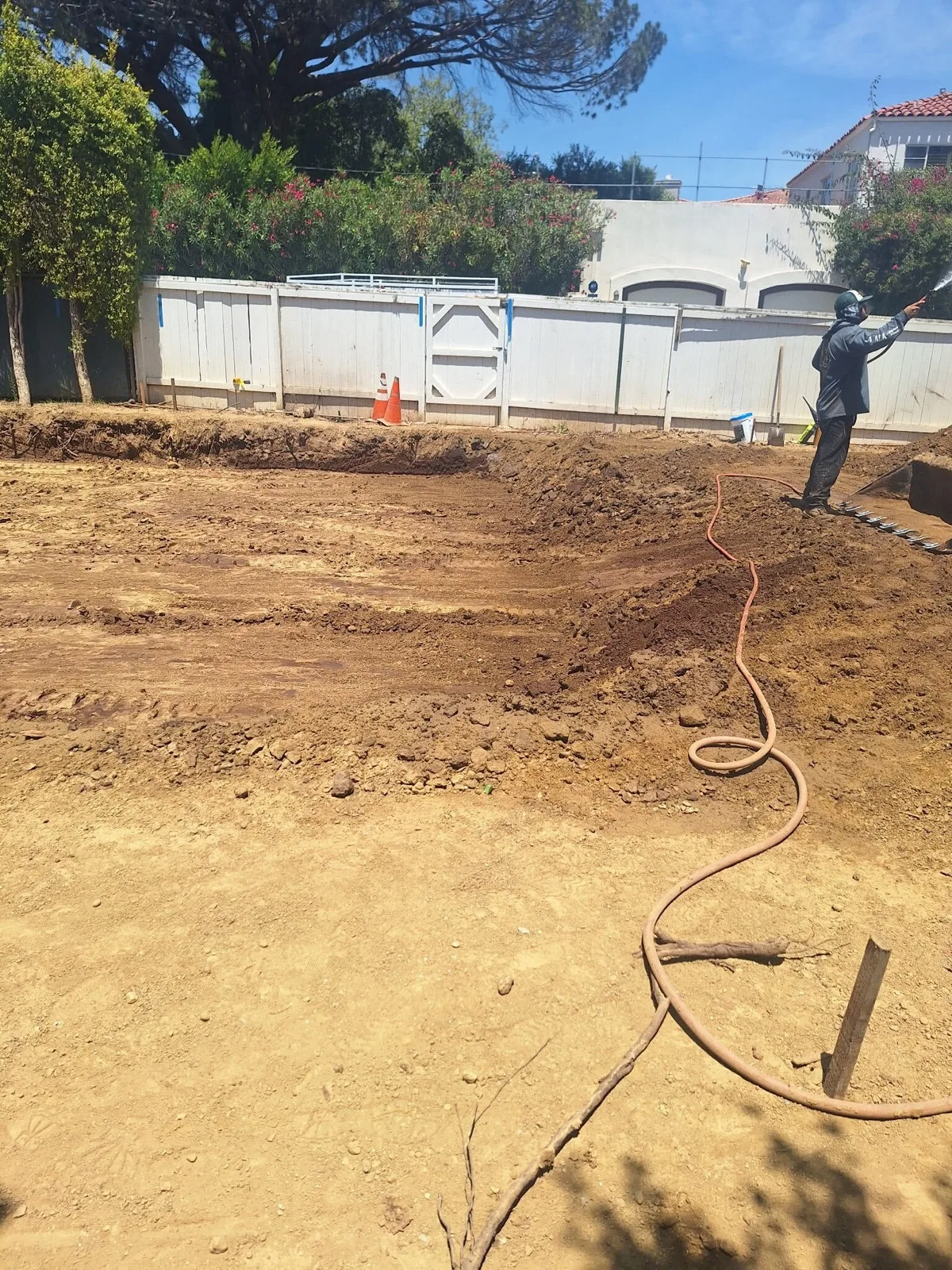
For the neighborhood, the South Coast AQMD dust rule applies to any activity that makes dust, demolition included. Visible dust cannot cross the property line, and the rule's own control measure for demolition is water, applied in enough quantity to keep a plume from forming. Watering the work area is the tool for both rules. That is the hose you see running in our job photos.
Our crews work outdoors year round, so Cal/OSHA's heat illness rules are part of every summer job. The rule has numbers in it.
Cal/OSHA requires fresh, cool drinking water on the site, free, close to where the crew works. When water is not plumbed in, the shift starts with enough for one quart per worker per hour.
When the temperature passes 80 degrees, shade has to be up the whole time the crew is present, with room for everyone on a break to sit in it. A worker who feels the heat is allowed and encouraged to take a cool-down rest in the shade.
At 95 degrees the high-heat procedures kick in, starting with a way for every worker on the site to reach a supervisor. Every worker and supervisor is trained on heat illness before the work starts.
Cal/OSHA requires every California employer to establish and maintain an effective Injury and Illness Prevention Program, in writing. The rule spells out what goes in it:
That program is the frame a compliant demolition company works inside, and it is the frame our job sites run inside.
One more rule reaches the big jobs. Cal/OSHA requires a permit to demolish any building or structure more than 36 feet high. The estimate tells you whether your structure reaches that line. The city permit is separate, and it applies to every house.
This page is the standard. The estimate is where it meets your property. Call (310) 546-4855 or send the form, and an estimator will come look at the job. The estimate is free.
The questions property owners ask about what happens on the site, and what Cal/OSHA and the air district require.
A house that needs to come down, a garage full of junk, a lot that needs clearing? Call or send the form and we will look at the job with you and price the whole thing, teardown through haul-off. The estimate is free.
Tell us about your project and we will get right back to you.