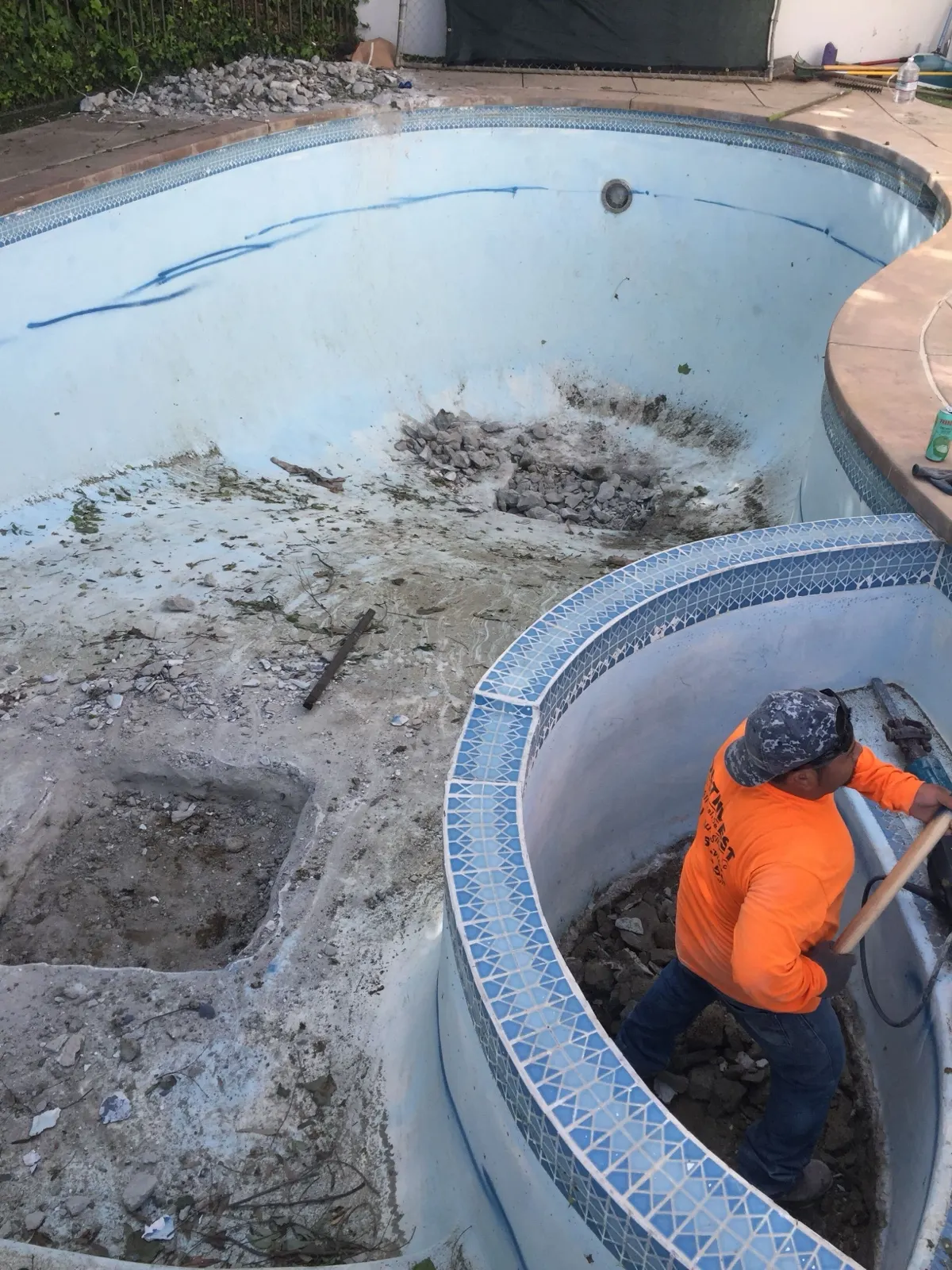
How much does pool removal cost in Los Angeles?
Published 2026 cost guides put inground pool removal at about $4,000 to $16,000 for a full removal. Filling one in runs about $2,000 to $10,000. Those are national numbers. Your pool, your access and your city move that figure. An on site look sets the real one.
This guide is about filling a pool in, not filling one up with water. It covers the two routes, what moves the price here, and what the city permit adds. For how the work runs in the yard, read our pool demolition and removal page.
What does a pool fill in cost compared to a full removal?
A fill in is the cheaper route. Guides put it at about $2,000 to $10,000, against $4,000 to $16,000 for a full removal. The gap is trucking and fill. A fill in leaves the shell in the ground. A full removal breaks the shell out and hauls every piece away.
| Route | Published range | Permit route in the City of Los Angeles | What the ground can hold after |
|---|---|---|---|
| Fill in, shell stays in place | $2,000 to $10,000 | Grading permit, with a plot plan that marks the fill as uncertified and calls out drainage holes in the pool floor | Landscaping use only |
| Full removal, shell comes out | $4,000 to $16,000 | Grading permit naming the total cubic yards, shell removed from the site, compaction report approved by the city | Ground that can carry footings, so a build can go there later |
Another 2025 guide puts the same two routes at $3,000 to $7,000 for a partial fill in and $5,000 to $15,000 for a full removal, with an average near $7,500. Guides disagree because pools do. Treat any published range as a planning band.
Pool type sets part of it. A vinyl or fiberglass pool is thin and light, and it comes out in pieces. A gunite or concrete shell is thick, heavily reinforced and heavy to haul. Above ground pools sit at the bottom, about $300 to $2,500. There is no shell to break.
Attached spas come out with the pool, since they share a wall and share plumbing. A portable tub sitting on a pad is a smaller and different job, and that is hot tub removal.
What drives the price of pool removal in Los Angeles?
Size and depth come first, then access. A diving end holds more concrete and takes more fill. A yard a machine can reach costs less than one where every load is carried out. Deck and hardscape, engineered fill and testing, permits, disposal distance and draining fill out the rest.
Start with size and build. A large gunite pool with a raised bond beam and stone coping is heavy. It puts far more weight in the truck than a small vinyl pool. Disposal yards charge on weight, so that shows up in the price.
Access is the Los Angeles line. Westside and South Bay yards often sit behind a locked gate, a narrow side yard or a hillside street. A skid steer through a side gate keeps the day short. Jackhammers and hand carry add days, and days are labor.
The deck and the hardscape count too. The concrete deck, the coping and any flagstone around the pool usually leave with the shell. That is more square footage to break and more weight to load out.
Fill and testing sit on top of that. A fill in takes clean soil or gravel, moistened and packed down in layers. A full removal takes structural fill, compacted to at least 90 percent relative compaction. A soil testing agency the city approves does the testing. That testing is its own cost, and it is what makes the ground buildable.
Disposal shows up in the truck count. Clean concrete goes to certified recycling facilities and is crushed into base rock. Rebar and the metal off the equipment pad go to metal recycling. What is left goes to a licensed transfer station. Distance to those yards sets how many round trips the job takes.
Draining comes before any of it. The water gets dechlorinated first, then usually goes to the sanitary sewer cleanout on the property under your city’s rules. That is time on the calendar before the first hammer swings.
What does the permit add in Los Angeles?
In the City of Los Angeles, a grading permit is required either way. The building department lists backfill as grading work. Its bulletin on backfill of swimming pools sets what each route needs. National guides put a pool permit at about $50 to $250. LADBS runs its own permit fee calculator, so the Los Angeles number comes from the department.
Leave the shell in and the plan has to state that the fill is uncertified. The bulletin then holds that area to landscaping use. It also rules that route out where the ground slopes steeper than 10 percent. The plot plan also carries two notes. Drainage holes go in at least 12 inches across, spaced no more than 8 feet apart. One of them sits at the deepest point of the shell.
Take the shell out and the rules change. The shell has to leave the site. The fill gets tested for relative compaction, and a compaction report goes to the city for review. No foundation work happens on that fill until the report is approved.
Both routes carry three inspections: an initial meeting, a bottom inspection before any fill goes in, and a final. A site inside a hillside grading area also needs a grading pre-inspection report. Those dates set part of your schedule. Our guide to Los Angeles demolition permits covers how the city handles the wider process.
Beverly Hills, Santa Monica and the beach cities run their own building departments, and their rules are their own. Ask before you set a date.
How long does pool removal take?
Most residential pools are days on site, not weeks. A fill in is the shorter of the two. A full removal runs longer, because the shell comes out and the fill goes back in layers with testing. Draining happens first, and city inspections are scheduled between steps.
Access decides the rest of the calendar. A machine that reaches the pool moves the shell in loads. Hand work moves every piece twice. Get the permit and the draining started early, because that front end is usually longer than the breakout.
What does the yard look like after the pool is gone?
Dirt. The fill goes in and gets compacted in lifts, and the surface is leveled off. We finish with rough grading and leave a clean pad. What goes on top of it is a separate job. Lawn or paving is work for another trade.
On the fill in route, the bulletin holds that area to landscaping use. Lawn and planting go over it. An addition or a garage on that footprint is a different matter. That needs the shell out, structural fill and an approved compaction report. Pick the route around what the space becomes.
When is taking out only the pool deck the cheaper job?
When the pool is staying. If the shell is fine and only the deck is cracked, that is a pool deck removal job. Published guides put concrete removal at about $3 to $8 per square foot with disposal. The full breakdown is in our concrete removal cost guide for Los Angeles. Measure the deck and you have a rough band to work from.
A pool coming out with the whole structure works the other way. It gets priced as its own line inside the house demolition, and one set of trucks hauls both.
Every pool prices differently, so we look before we quote. An estimator comes out and checks the shell, the access and the route your city allows. We price the demolition and the haul off as one number. That visit is free. Call (310) 546-4855 or send us the details and we will set a time.